Bakery Management Software
Know what each batch should consume, what the bakery produced, what was sold and where margin is being lost—without stitching together notebooks and spreadsheets.
- Recipes and batch production
- Ingredient stock control
- POS and online orders
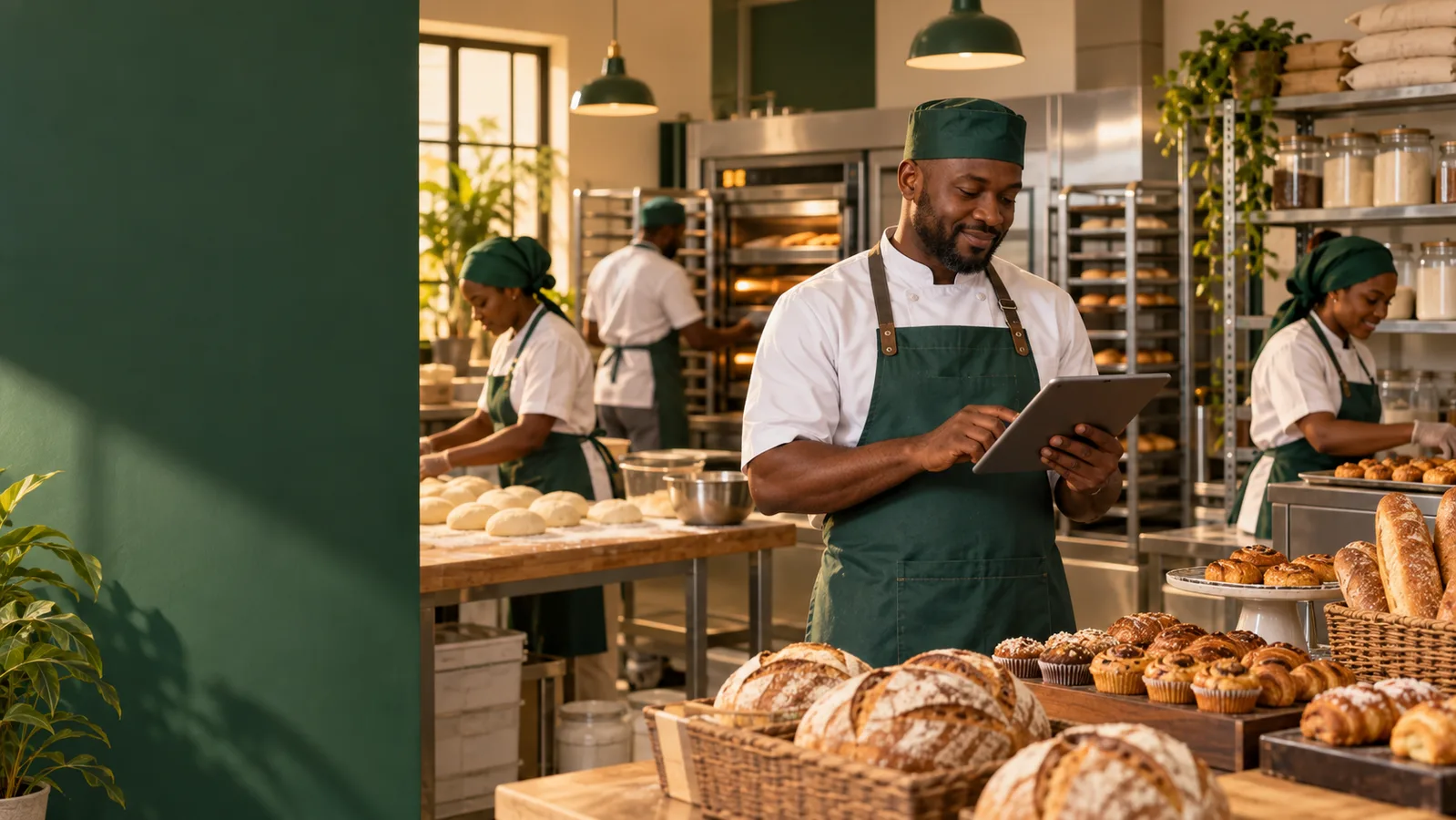
A full display cabinet does not guarantee a healthy margin
Bakeries buy ingredients in bulk, transform them in batches and sell finished goods through several channels. Flour is measured in bags or kilograms, recipes use smaller units, and output varies with portioning and waste. If purchasing, production and sales are tracked separately, the owner can see revenue without understanding what it cost to produce.
Freshness adds pressure. Producing too little means lost demand; producing too much means markdowns or waste. Custom cakes and pre-orders introduce deposits, due dates and customer expectations, while counter sales still need to move quickly during morning and evening peaks.
The information usually exists, but in fragments: a production book, a cashier’s total, supplier chats and bank alerts. Bakery management improves when those events form one trail from ingredients received to finished items produced and sold.
Make every batch part of the business record
Storeboot lets a bakery maintain ingredient and finished-product records, define recipes and record production runs. A run can consume component ingredients and add the output to finished stock, creating a more useful basis for availability and cost than a handwritten “baked today” total.
The same finished products can be sold through POS or an online storefront. Orders, customer details and payments remain connected, while stock movements reflect the chosen operating model. For made-to-order menu items, recipe depletion can also happen as sales are fired or completed.
Purchasing, suppliers, expenses and accounting provide the commercial context. Management can compare sales with ingredient use and operating costs, monitor branches, and give production or cashier staff only the access required for their roles.
Production overview
42 ingredients
6 batches completed
Output today
684 units
↑ Updated live
Sales
View current activity
Stock
View current activity
Customers
View current activity
Illustrative Storeboot product view. Available information depends on your plan, modules and business setup.
The features behind a more controlled operation
Each feature is useful alone. The bigger advantage comes when the same sale, item, location, customer and payment keep their context across the platform.
Recipe definitions
Describe the flour, sugar, butter, filling, packaging and other components required for a product using practical units and quantities.
Production runs
Record a batch so ingredients move out and finished items move in. Production becomes a traceable event instead of an unexplained stock adjustment.
Ingredient and finished stock
Keep raw materials distinct from sellable output, review balances by location and investigate movements when physical counts differ.
Counter and online sales
Use POS for walk-in customers and a storefront for pre-orders or delivery enquiries, with products and business records in the same platform.
Suppliers and purchasing
Raise purchase orders for ingredients and packaging, receive delivered quantities and track vendor payments instead of relying on chat history.
Costs and reporting
Record expenses and let ingredient costs contribute to a clearer view of production economics, sales performance and business profit.
From setup to useful daily records
Good software does not repair a process by magic. It gives the team a clear sequence, fewer places to record the same event, and better evidence for the next decision.
-
1
Set ingredients and units
Create the raw materials the bakery buys and choose consistent base units for measurement and stock control.
-
2
Define the recipe
Attach component quantities to bread, cakes, pastries or other output and verify the expected batch yield.
-
3
Record production
Post the quantity actually produced so the corresponding ingredients and finished stock move with a traceable reference.
-
4
Sell and review
Complete counter or online sales, watch replenishment needs and compare output, sales and remaining stock.
What this looks like in a real business
Storeboot is configurable because two businesses in the same industry may sell, fulfil and account differently. These examples show common patterns—not rigid templates.
Bread bakery
Record daily loaves by batch, monitor flour and packaging, and compare production output with counter and wholesale sales.
Cake studio
Manage product options and customer orders while keeping core ingredients, expenses and payments visible to the owner.
Multi-outlet pastry brand
Produce centrally or by branch, move finished goods to outlets, and see which location sells through fastest.
Start free. Upgrade when operations demand more.
Basic is built for getting online and organised. Enterprise adds the branch, till, people, procurement and finance controls required by more complex teams.
Basic
For WhatsApp, Instagram & TikTok sellers, pre-order and dropshipping businesses.
Free forever
Start for free- Free online store
- Free subdomain
- Unlimited products
- Unlimited services
- Unlimited orders
- AI-powered & managed
- Storeboot Payments
- Customers & invoicing
- Staff accounts
- Inventory management
Enterprise
For in-house stores that need branches, POS and full back office.
₦5,000 /month
Start free trial- Everything in Basic, plus:
- Unlimited branches
- POS / daily till support
- Expense management
- HR & payroll support
- Roles & permissions
- Offline POS / app sync
- Supplier management
- Payables & receivables
- Procurement & finance
Yearly Enterprise billing is listed at ₦4,000 per month. Prices shown are in Nigerian Naira and may change; taxes, payment processing and any third-party services are separate where applicable.
Storeboot versus a disconnected setup
A recipe spreadsheet explains what should happen, while a sales app explains what customers bought. Neither alone explains the transformation between them. Storeboot connects ingredients, recipes, production output, sales and costs so the bakery can investigate yield and margin with fewer manual reconciliations.
Questions business owners ask before switching
Need an answer specific to your process? Tell us how your team works and we will help you map it honestly.
Ask a questionCan Storeboot calculate ingredient usage from recipes?+
Yes. Recipes define component quantities, and production or recipe-based sales can create ingredient movements using the configured units.
Can I record bakery production batches?+
Yes. Production runs can consume ingredients and create finished-goods stock, preserving a traceable production record.
Can I sell at the counter and online?+
Yes. Storeboot provides an online store in Basic and adds POS and broader in-house operations with Enterprise.
Can I manage ingredient suppliers?+
Yes. Supplier records, purchase orders, receiving and vendor payments are part of the procurement workflow.
Does it support more than one bakery outlet?+
Yes. Enterprise supports unlimited branches and inventory by branch/location, including stock transfers.
Can Storeboot eliminate bakery waste?+
Software cannot remove waste by itself, but accurate recipes, production records, sales history and stock counts make variance visible so managers can take informed action.
Put sales, stock and the rest of the operation in one place.
Create your Storeboot account without a card. Start with the workflow that matters most, bring the team in, and add more control as the business grows.